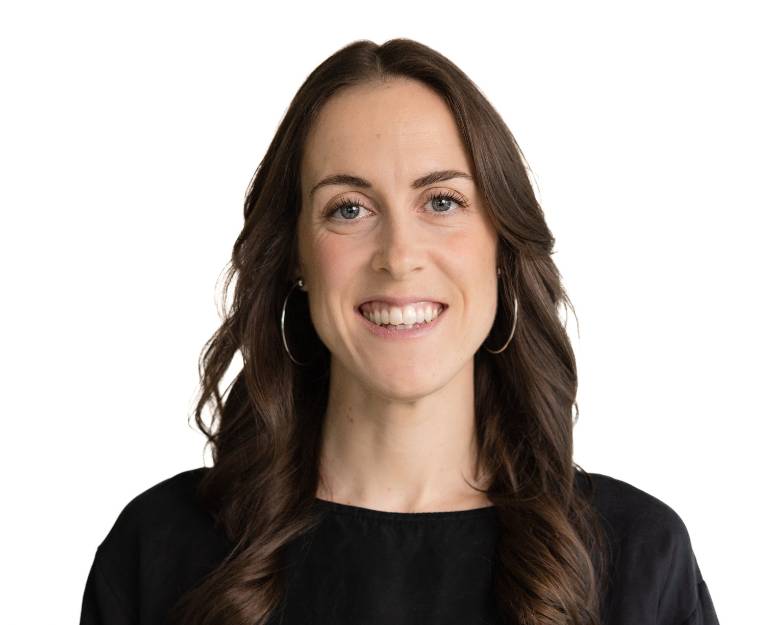
Before founding DeNova, Brianna Orr Stratton was already asking bigger questions about the role business could and should play in the world. While earning her MBA, she was increasingly drawn to the idea that a well-intentioned business could do more than grow. It could be a force for good.
“Through business, I could have the most rapid impact on the change that I wanted to see in the world,” says Orr Stratton. “If we built businesses that created a solution to a global problem and we did it with integrity, focus and the right goals – that’s something that I wanted to be a part of.”
That belief became the foundation for DeNova, the company she founded in 2016 and now leads as CEO. Headquartered in Nova Scotia, this biotechnology company is rethinking how protein is made. DeNova’s process creates a novel, nutrient-dense food source while reducing land, water and carbon intensity impacts compared to conventional plant and animal proteins.
An innovative way to create protein
DeNova’s groundbreaking technology uses biomass fermentation to produce microbial protein for animal feed, initially supplying the growing aquaculture sector. Instead of relying on soy crops, animal products, or ingredients from the ocean, DeNova can produce protein year-round, entirely indoors.
Their process uses a naturally occurring bacteria, originally found in Atlantic Canada. By feeding it methanol, that can be derived from natural gas or captured carbon dioxide, the microbe grows, producing protein, which is then harvested and dried for use as an agriculture and aquaculture feed ingredient.
Their product can be consistently produced at scale and is resilient to the climate and supply chain disruptions currently impacting traditional agriculture.
Shelf-stable, reliable aquaculture feed
The result is DeNova’s first product, Psomi™ – an all‑natural, shelf‑stable protein ingredient. It has been extensively tested and designed in collaboration with aquaculture feed producers to meet their expectations for performance and cost. It has future potential across livestock and pet food.
“This is not a green premium,” says Orr Stratton. “This is the way that business and manufacturing should be done, responsibly.”
Moving into large-scale production
After a decade of research and validation at their lab and pilot plant, DeNova is now transitioning into commercial production. They’re constructing a Market Entry Plant in Dartmouth, Nova Scotia. At the same time, DeNova is preparing to build a large scale production facility in Alberta, where proximity to their methanol feedstock will improve cost competitiveness.

Inside DeNova’s plant – where they produce microbial protein for animal feed
This shift marks a defining phase for DeNova, one that requires replicating and scaling their technology safely and reliably.
“When you’re moving into market, you have to deliver regularly, consistently, and at scale,” says Orr Stratton. “The work now is maintaining what got you successfully to where you are, while continuing to level up.”
Meeting the moment
They’ve arrived at this stage of growth well-placed to address broader national priorities. By building Canadian supply chains, creating new skilled jobs, and establishing a high-value protein export, DeNova can boost Canada’s food security and economic resilience.
“We can build something extraordinary at home with IP and with large scale production. We can do that using our own natural resources in a really efficient way that can serve our own country and export to the world,” says Orr Stratton.
A collaborative, welcoming ecosystem
As the company grows, Orr Stratton wants to maintain the curiosity and inventive spirit that inspired her to create DeNova.
Rather than always planning to build a biotech company, she describes falling into the ‘wormhole of the world of fermentation’, a turning point which reshaped her career. She followed that passion for the incredible potential of microbes, and that sense of exploration remains a key value for DeNova even as they scale.
“We’re now a 30+-person company. Our problems are different, our objectives are different, but your endgame is always the same.” says Orr Stratton.
Lifted up by the community
Equally important has been the community that guided DeNova along the way. She says Atlantic Canada’s life sciences ecosystem and supportive mentors have lifted them up with a collaborative spirit, and helped them succeed.
“We are here because of the village. We’re here because of the relationships and the people that believed in us from Day One, and consistently still do,” says Orr Stratton.
Solving problems that matter
As expectations grow for DeNova, Orr Stratton remains motivated by solving problems with a purpose and value-driven team, at a moment when the impact truly matters.
“It’s the constant ability to create something that didn’t exist before,” says Orr Stratton. “I live every single day in possibility.”